

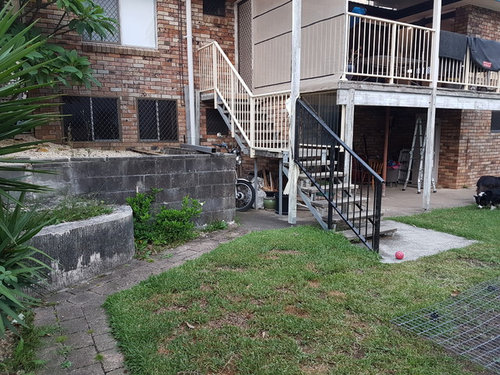
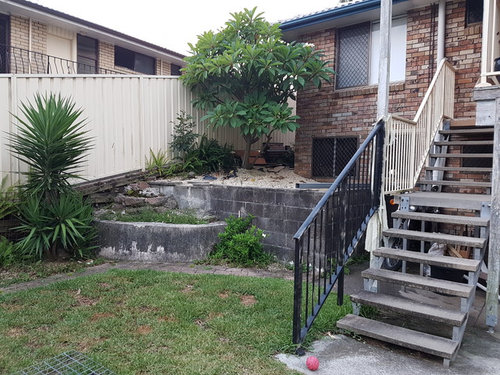
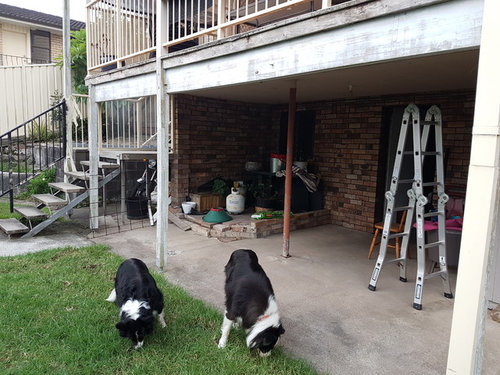
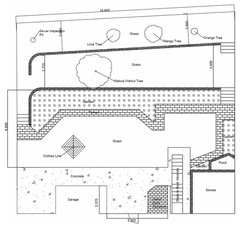
Advice RE making back yard kid and entertaining friendly
Evvie Pregal
5 years ago
Featured Answer
Sort by:Oldest
Comments (12)

Lyn Huppatz
5 years agoEvvie Pregal
5 years agoRelated Discussions
What's a great dog breed for kids?
Comments (23)Adopting a puppy is like adopting another baby. They need a lot of time and supervision to get them to the self sufficient trustworthy stage where you don't need to supervise their every waking moment. You get there faster with canines than humans, but not if you don't have the time to put in the WORK that they need. The best dog for a busy family is often that ADULT Heinz57 mix. They still need exercise, training, and attention,but not like a puppy does. Consider adopting a black dog from a shelter and save a life. It's a good lesson for the kids that animals shouldn't be throwaways. Black dogs and cats are the least adoped and most euthanized. Save a life and gain a friend for life. Also consider that the best dog for your famly might just be a cat! Cats have taken over from dogs as the most popular pet in the US because they can potty indoors and don't need as much structured exercise and attention. They are perfect for those who seek companionship with less of a time commitment....See MoreAdvice tweaking final Floorplan
Comments (38)Sorry but I would sack the draftsman. He/shes no architect. That roof is a nightmare. I try and think about the function of each room and how you would live in it. The entrance is like a cricket pitch but no where to put the bat and ball when you are finished. You come in from the garage or entry door and you are in the middle of nowhere.. Where you going to put you shoes and jacket. And if you want to use the toilet or wash your hands went you get home you have a 20m trek through the house.?? Don't like the bedroom 1 right at the front door and the doors are all hung wrong. You are going to be walking around them all day. The ensuite is badly sized. Shower to narrow, toilet too long and no basin. You going to be opening that door with dirty hands. Think about the floor space to dry your self and dress/undress. Cavity sliders are a pain. Like you have to open them almost all the way to get through where an opening door you glide through. With cavities also you mostly have to walk into the corner of a room to get in and out (study and rumpus) where as a normal door it 1/2 a step less. Master bedroom walk-in wardrobe is dumb. Draw it on the ground, work out how your clothes will hang, and see how much room you have left. Same for the bedroom 3 and 4 wardrobes..Dumb. What were you thinking with that pantry.. It like 8 steps in then 8 out again. Pantry should be more square, have a butlers sink in it. Be the food prep area, pots dishes etc out of sight especially in an open plan place. Be light and the food perpetration area be close enough to the door so you can converse with the guests or family other wise you might as well have a maid who is not seen or heard. Bed 3 and 4 are miles away from a bathroom. The toilet is probably OK in size, just needs a bigger door. 720 you are going sideways through it. Bed 2 backs onto the shower and toilet. Which room are you going to put your little kid in. Long way from mum and dad....See MoreFloor plan layout advice to make this house feel more open
Comments (33)I'd say it's an easy min. $250K minimum flagfall on a relatively basic/not fancy spec/fit-out in a super good package deal. You're essentially renovating an entire house including moving plumbing, walls replastering, new floors throughout etc....not to mention lights, rewiring etc etc, it goes on and on.......This scope would still cost a builder themselves $150K, not factoring in their own time/labour, paying cash for sub-trades and getting super deals on all materials....and then you could only really potentially roll this type of operation out if you actually have the money in the bank. If you need to borrow then you'd need a building contract which then brings in market rates, profit margins and GST. Take profit and GST out from $150K and there's barely enough left to cover materials alone, when the labour/materials ratio (of a construction cost) these days, particular for renovations is labour being the most significant cost involved.............you can fine tune and perfect a floor plan like you have (which I reckon is pretty good as a plan), but when push comes to shove it always comes back to budget and costs, which is why we always are encouraging people to utilise design professionals who manage the challenge of designing within budget limits. If you separate budget/costs from the design process (rather than integrate it) more often than not it will leads to disappointment and misalignment of your expectations of what is realistic....See MoreKitchen-living reno re-design advice needed
Comments (20)All - Thank you so much for your suggestions. Very helpful! Oklouise – Thanks for your suggestions. I like what you’ve done. I had not thought of the the off-centre solid wall suggestion in the tv room. This will make the space more functional. Very helpful. Thanks. Siriuskey – your design was similar to oklouise’s, so again many thanks for this. I like what you did with the entry area so will see if I can make this work given the dimensions of the house. BTW - the house is brick but I am thinking of partly limewashing/whitewashing it - but this is a very low priority item right now. Dr Retro – thanks for your comments. Appreciated. Yes, I'll check the sizing of furniture etc. Kate – thanks for your question re: wall at the end of the dining area. I’d like to create an attractive focal point from the kitchen to the garage wall, rather than just have an off-centre garage door (i.e. going for a look more like the below). I’d also like more storage so I added the partition wall, which could also have cupboards on the garage side. But your vestibule idea could work too. I will look into that while taking into account the other ideas from houzzers here too. All very helpful. Thank you. Dreamer – thanks for your suggestions as well. These give me food for thought so need to ponder more. I’m not sure there will be enough space for a fridge and an island but will draw it up and see. Just to give you more info here, not essential, but I would have liked to be able to have another tv (hidden in a wall-mounted cabinet) on the existing east-west wall that divides the kitchen-tv-formal zones now where the tv faces the kitchen so I can watch the news while cooking. I have looked at adding storage to the entry area as I think the house needs more storage so I will look at this some more again. Thanks again. Really appreciate you taking the time to get back to me on this. Cheers. Thanks again everyone. Cheers....See Moreoklouise
5 years agoEvvie Pregal
5 years agooklouise
5 years agoEvvie Pregal
5 years agooklouise
5 years agoEvvie Pregal
5 years agolegendaryflame
5 years agolegendaryflame
5 years agoEvvie Pregal
5 years ago



legendaryflame