
Beach House by MDS
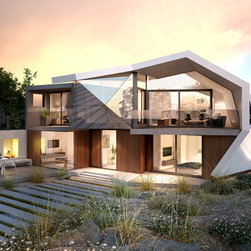
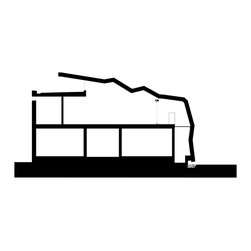
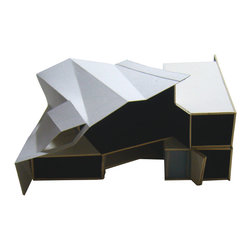
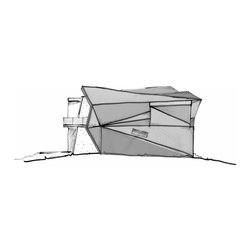
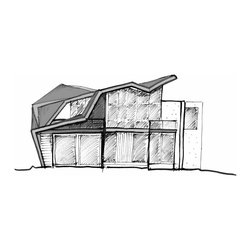
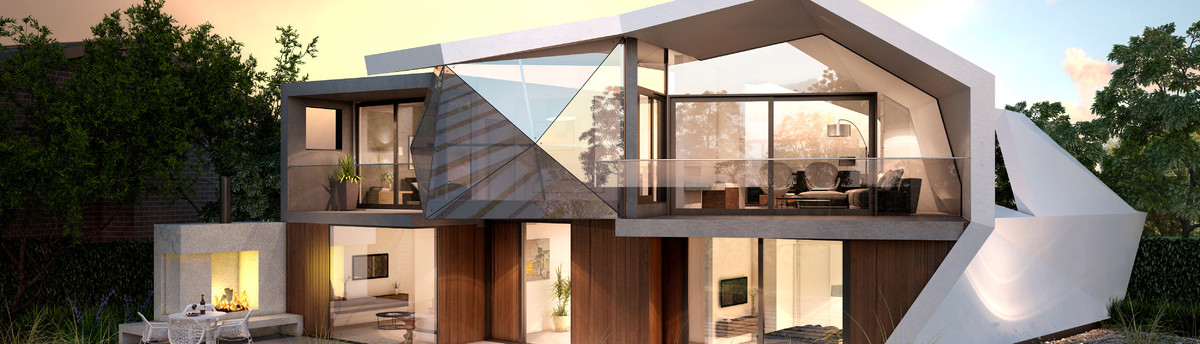
Blurring the boundaries between traditional building elements, we've called this project ‘Skin & Shelter’ : With a simple gesture – almost like forming a C-shape with your hand – the folded skin protects from being overlooked by neighbours. The shelter structure leans over the remnants of an existing 1960′s beach house on the opposite side, completely transforming and absorbing this existing ‘box’ into the new creation. The spaces formed in-between the old and the new open up towards front and back, to make the most of the amazing views either side.
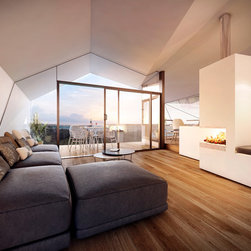
“We loved Melbourne Design Studios’ architectural response", said Evelyn and Uli, our clients. "The very simple ‘shelter’ idea and the way its skin is conceived make it simple, beautiful and sustainable at the same time. The interiors with the folded surfaces enclosing the rooms almost give a hint of a tarp or a tent – a beautiful beach house feel.”
The residence sits in beautiful scenery on top of a hill, by the beach. The brief was to capture the amazing views front and back and to create a bright beach residence for large family gatherings, that can mature into the owners’ permanent home over time.
Examining boundaries between building elements, like wall or roof, takes the architecture back to its fundamental function of providing shelter. Almost a bit like a cave, the skin protects from the elements and the ‘wilderness’. Making this skin a continuos, homogenous surface was probably one of the biggest challenges of the job – and with the beautiful result well worthwhile the effort.
Like all our projects, the architecture is based on passive solar design principles : Lots of glass capturing the northern winter sun, with long eaves shading the hotter summer sun, few and little openings to east and west, and particular protection along the western facade. Using double glazing with low e-coat, adding high insulation, exposed concrete floors as thermal mass, harvesting rainwater and greywater and re-using building parts and materials all make it a very ‘green design’. Active ESD systems like Solar Hot Water are then added on where meaningful, finding an optimum between economic and ecological sustainability.
Winner BDAV Awards 2015
Finalist in the Melbourne Design Awards 2012.
Published in ‘Architecture & Design’, August 2012
“We loved Melbourne Design Studios’ architectural response", said Evelyn and Uli, our clients. "The very simple ‘shelter’ idea and the way its skin is conceived make it simple, beautiful and sustainable at the same time. The interiors with the folded surfaces enclosing the rooms almost give a hint of a tarp or a tent – a beautiful beach house feel.”
The residence sits in beautiful scenery on top of a hill, by the beach. The brief was to capture the amazing views front and back and to create a bright beach residence for large family gatherings, that can mature into the owners’ permanent home over time.
Examining boundaries between building elements, like wall or roof, takes the architecture back to its fundamental function of providing shelter. Almost a bit like a cave, the skin protects from the elements and the ‘wilderness’. Making this skin a continuos, homogenous surface was probably one of the biggest challenges of the job – and with the beautiful result well worthwhile the effort.
Like all our projects, the architecture is based on passive solar design principles : Lots of glass capturing the northern winter sun, with long eaves shading the hotter summer sun, few and little openings to east and west, and particular protection along the western facade. Using double glazing with low e-coat, adding high insulation, exposed concrete floors as thermal mass, harvesting rainwater and greywater and re-using building parts and materials all make it a very ‘green design’. Active ESD systems like Solar Hot Water are then added on where meaningful, finding an optimum between economic and ecological sustainability.
Winner BDAV Awards 2015
Finalist in the Melbourne Design Awards 2012.
Published in ‘Architecture & Design’, August 2012
Country: Australia
Postcode: 3943