
Recent Activity

Joy is located in Portland, OR. While it does occur there, records tied to regional checklists (such as the Flora of the Pacific Northwest) notes Brickella eupatorioides limited or rare status/affinities in parts of the broader Pacific Northwest.

The plant looks very similar to mine. Brickellia eupatoroides is also in aster family. It is in shade as to why it is not blooming.
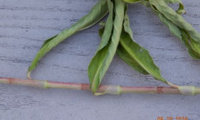

I just want to clarify that there's only 1 species of Persicaria that has been considered to be placed into a seperate genus. It's Virginia Jumpseed aka Woodland Knotweed, Pericaria virginiana. Virginia Jumpseed has a long flower stem with the flowers seperately spaced out, while the other Persicaria,(Smartweeds) have a much shorter flower stems and the flowers are held together in s tight cluster. Persicaria virginiana has an Asian lookalike named Persicaria filiformis. Filiformis has red flowers and is sold in the trade. The danger is that it can be easily confused with our native jumpseed.
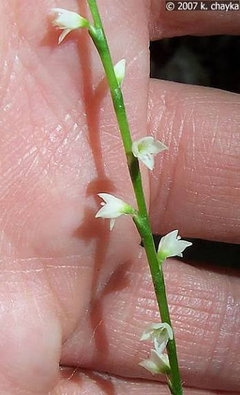
Virginia Jumpseed
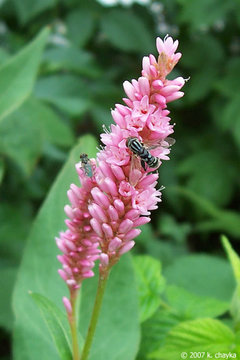
Pennsylvania Smartweed
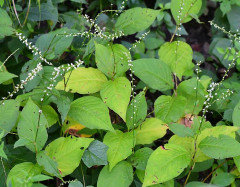
Virginia Jumpseed
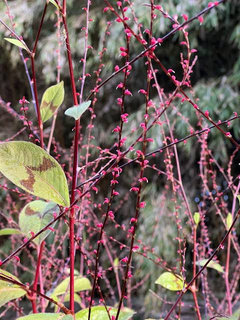
Asian Jumpseed, Persicaria filiformis
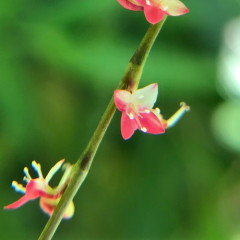
Asian Jumpseed
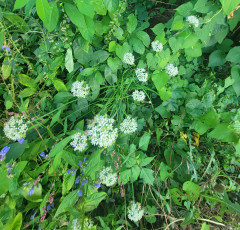
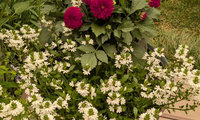


@Jay 6a Chicago, The allium is Lavender Bubbles. I keep trying to grow native allium without luck. I think I inadvertantly weed it out each time thinking it is onion grass. I absolutely live the summer blooming varieties though! I planted a bee variety this year called Bobnldhead. It is taller (30” I believe) with white blooms, but I dob’t think it is goingbto bloom for me this year.
@diggerdee zone 6 CT, there was much head scratching on my end to ID the salvia since I started from seed 3 or 4 springs ago. It is reliably hardy for me here even through the polar vortexes (vortices?). I just remembered it had blue in the name which is not at all helpful. Anyway, I finally remembered thatbit is Salvia farinacea ’Blue Bedder’ which was super confusing because that same year I tried Echium ”Bedder Blue.”
In any case, it is easy to start indoor from seed, but needs an early start (10-12 weeks before last frost). It gets 30-36” tall but several years in, I think mine have passed that mark. If you do try it, leave the plants, don’t cut them back, and bury them under a blanket of fall leaves. They are hardier than you might imagine and a bit late to wake up in the spring.
Hmm, I'm willing to bet the farm that I did try Blue Bedder, and it never got that tall. My favorite annual salvia is Victoria Blue, but it never got very tall, and always bloomed JUST after the roses I planted it with (or was it JUST before...???)
Anyway, that's why I tried Blue Bedder, since it was supposed to be taller. Not in my garden.
I do now (for the last two years) grow Big Blue, which I also like. It's much darker, and quite late-blooming in my garden, and I don't grow it with my roses, but I do like it - and so do the bees, especially when Big Blue is one of the last things standing!
:)
Dee
Thank you @Jay 6a Chicago. I would love that!
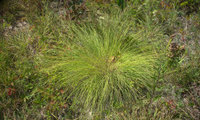
I found this:
Sporobolis heterolepis seems more likely simply because of of where it was growing, being described as preferring:
dry to medium, well-drained soils...... It prefers full sun and dry, rocky soil
Whereas Carex radiata grows in:
moist to mesic deciduous or mixed woods, floodplain forests, pond edges, wetland margins, and only occasionally in more open areas.
Owing to the fact that it is growing in a quite dry, open, area with no shade and that it was most likely planted here, I would think that Sporobolis heterolepis would have been a more likely choice. Jay 6a Chicago mentioned that Sporobolis heterolepis should be in flower and I see no signs of a flower but this could be due to the very hot and dry summer that we have had which possibly could delay the flowering.
I had to zoom in and enhance the raw original photo to see what I thought were blooms, so I guess I wasn't seeing things :-)
Prairie Dropseed has a distinctive odor on warm days. Some say buttered popcorn. I don't get that, but it is unique and to me quite pleasant.
I usually cut back perenniala that grow tall to prevent them from flopping or shading other plants. U have noticed they bloomed later because of it. I spwnd more time deadheading in order to get rebloom. I would deadhead Zinnia, Asclepias tuberosa and Verbena bonariensis. The verbena would probably only grow 1 or 2 new stems. You can experiment with cutting back some Echinacea. You could also grow some of the other Echinacea species native to Missouri. They may bloom at different times compared to Echinacea purpurea. I've just added Echinacea pallida and Echinacea paradoxa to my garden.
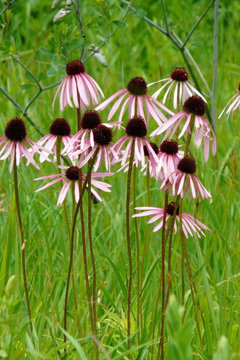
Pale Purple Coneflower, Echinacea pallida
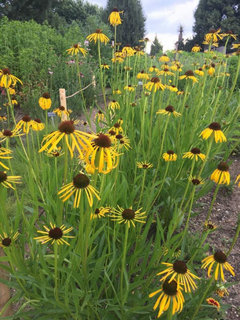
Echinacea paradoxa
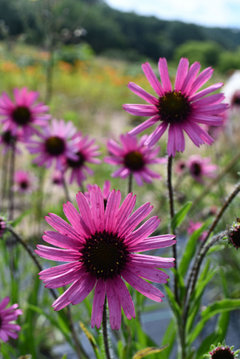
Echinacea tenneseensis
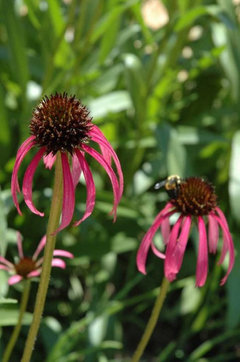
Echinacea sumulata
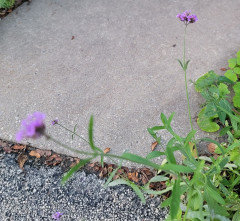
Verbena bonariensis
Jay your echinacea are beautiful. I also tried pallida and paradoxa from seed years ago but they never flourished for me and I lost them. Perhaps I will try again. I really love the bloom form of them.
christie I have the same problem, especially this year with the rain. I have a lot of leaners too lol. Most of my yard is shade so some things do lean toward the sun, and then with all this rain, lots of things - especially my daylilies earlier in the season - literally were laying flat on the ground blooming!
:)
Dee
I don't cut back to encourage re-bloom, per se, but rather I deadhead to tidy up, especially annuals -- zinnia, geranium, heliotrope, salvia, marigold are the annuals that pop into mind. A lot of perennials, too, if I have the time and feel like putzing around. I did notice this year that balloon flower will reward you with light re-bloom if you deadhead.
What I cut back hard is catmint and perennial geranium -- after the bloom flush in late May-early June they get cut to the ground to encourage fresh foliage. Otherwise, they tend to look messy. They fill in again very fast and look fresh the rest of the season. No rebloom on the perennial geranium, I can't say as though I've noticed with the catmint -- it's tucked away out of view so I haven't paid attention.
I leave the spent blooms on my Joe Pye and "Herbstonne" rudbeckia. The birds relish the seeds, and because the plants are so tall I can enjoy the feeding show at viewing height out the window. I might have to cut back this year, though -- even though they are hoop-staked with very tall hoops, the storms a couple nights ago did a number on them and other things, I'll have to wait to see if they bounce back upright after drying out or if the stems are broken. Same with the PeeGee hydrangeas. Actually, I am going to cut off the blooms on those because the branches will stay bent out of shape from the weight of the huge flower trusses if left too long. The birds don't care about those, though I do. :0)
Susy Jackson, how do you like your Callirhoe bushii? I keep mine on a short leash. I just got seeds for clustered Poppy Mallow, Callirhoe triangulatum. My Malva zebrina lasted a long time. The seeds must stay viable for a long time? Abelmoschus manihot is similar. I have an Abelmoschus vollunteer now. I like Malva alcea and it's the species I'd grow if I grew Malva again. Unfortunately my climate is too cold for a serious Flowering Maple obsession. I don't need tropicals to be happy and content.
Thanks all. Does Malva sylvestris spread from the roots? I've not noticed it doing so but this is the first time I've had it in my garden.
For what its worth, I've lived in Cascadia for more than 20 years now and dozens of aggressive species of garden plants have tried to invade my (six) gardens.....but not Malva sylvestris, which I had to invite! We will see how this plays out.
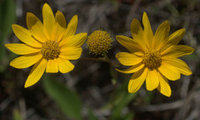

Lance-Leaf Coreopsis.
Lance-Leaf Coreopsis is one I first looked at because I have seen it in this meadow before, however the petal shape doesn't seem to match as its petal edges are more jagged and irregular whereas Helianthus pauciflorus petal more closely match those in my sample, smooth and pointed.
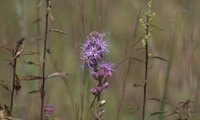
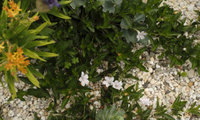
No it's definitely not a Vinca. My guess would be a Ruellia. Maybe humilis???? I'm not at all familiar with the genus.
Salvia uliginosa
Fuchsia Lady Boothby - named after the first president of the British Fuchsia Society. This plant grew to eight feet in its first season from a seven inch tall plant in a three inch pot. It's support is the top section of an Ilex aquifolium that I removed last winter.
Great pics @Jay 6a Chicago and @artinnaturez8b.
These are Jerusalem Artichokes. At first I mistook them for Woodland Sunflower, Helianthus divaricatus, which I actually would prefer.
I am glad I am not the only one who finds it difficult to tell them apart!