
Power street house
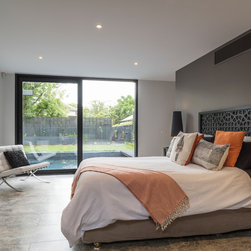
This project is for an architect and family that are concerned about urban consolidation and the awareness of our limited natural resources. The land was subdivided off the rear of a Victorian building in a genteel suburb of Melbourne, Australia. The original building was sold onto another family to use.
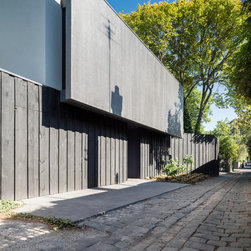
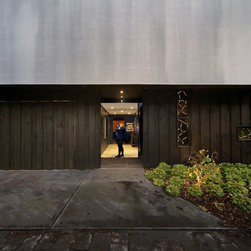
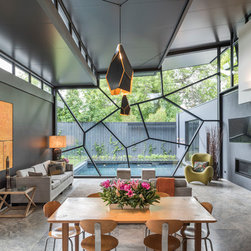
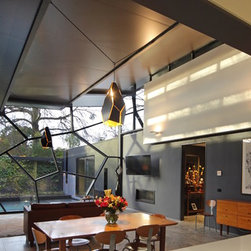
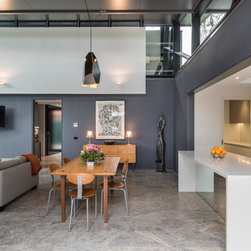
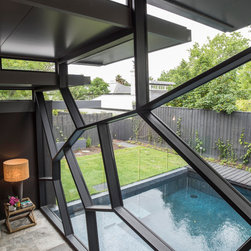
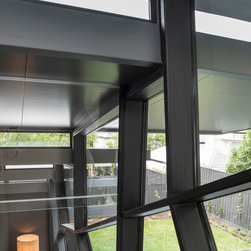
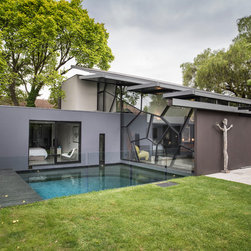
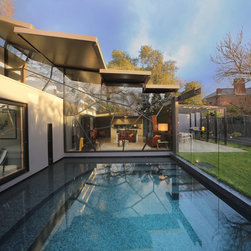
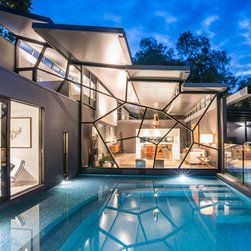
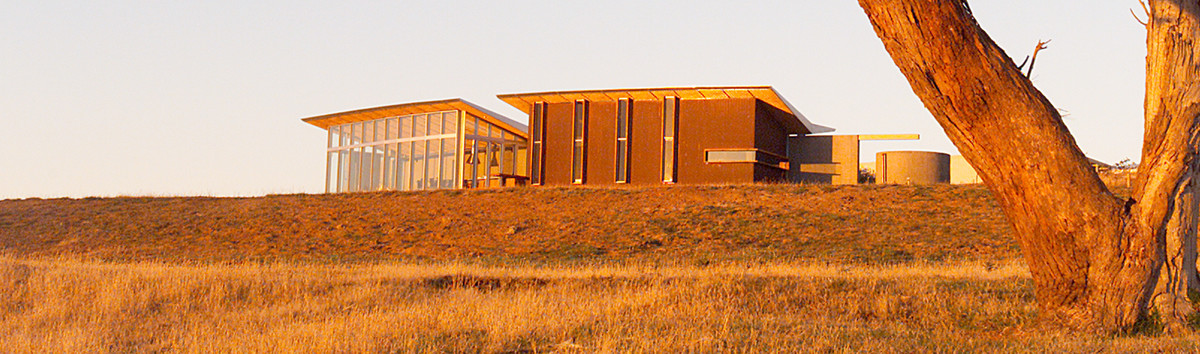
It`s image started life as a sketch of left over items stacked up in a pile up against the back fence. The stack became 200mm factory wall sandwich panels. They have fantastic insulation and structural qualities which was used to cantilever out to control passive solar heating of the house. The panels are held up by a structural steel curtain wall facing north. The cracked wall form of the curtain wall was derived from the faults found in crackled pottery glazing. The following of the fault lines derived the form and gave a very rigid structure
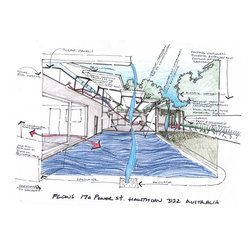
The emphasis on water is very important in this dry region. The roof panels have no gutters and the glazing between the panels enables a view of the waterfall over the panels The water then continues out to the modern cantilevered SHS gargoyles that drop the water into pits. They are intended to both delight and remind the occupants of the importance of water and their surroundings. The water wind and rain create reflections onto ceilings and walls through the day and enhance the involvement with the elements.
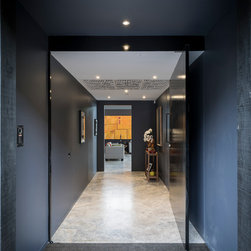
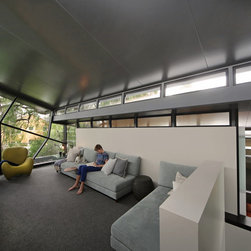
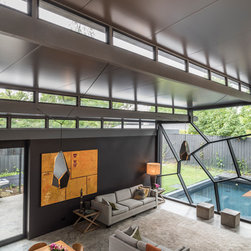
The windows between the roof panels create shadows from the surrounding landscape and project them onto the walls and floor. Wind movement and light colour changes are again emphasized.
The ever changing views of the movement of the light within out and out of the house make for an exciting and centering place to be.
It`s image started life as a sketch of left over items stacked up in a pile up against the back fence. The stack became 200mm factory wall sandwich panels. They have fantastic insulation and structural qualities which was used to cantilever out to control passive solar heating of the house. The panels are held up by a structural steel curtain wall facing north. The cracked wall form of the curtain wall was derived from the faults found in crackled pottery glazing. The following of the fault lines derived the form and gave a very rigid structure
The emphasis on water is very important in this dry region. The roof panels have no gutters and the glazing between the panels enables a view of the waterfall over the panels The water then continues out to the modern cantilevered SHS gargoyles that drop the water into pits. They are intended to both delight and remind the occupants of the importance of water and their surroundings. The water wind and rain create reflections onto ceilings and walls through the day and enhance the involvement with the elements.
The windows between the roof panels create shadows from the surrounding landscape and project them onto the walls and floor. Wind movement and light colour changes are again emphasized.
The ever changing views of the movement of the light within out and out of the house make for an exciting and centering place to be.
Country: Australia