

Carlton Cloister
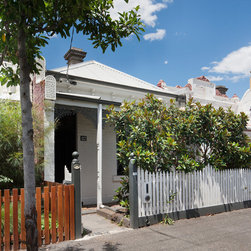
Like much of Melbourne’s Victorian era workers housing this single storey, single fronted terrace house is located walking distance to the CBD while the surrounding neighbourhood retains a distinctly quiet and leafy character. The terrace house however is often orientated east west, as was the case here, with little opportunity to orientate living spaces to a northern aspect.
With heritage overlays protecting the streetscape, the evolution of the terrace house is often discovered from the bluestone laneways to the rear. Here the eclectic mix of old carriage houses, decrepit fibro additions and more recent extensions to terrace houses are to be found.
To accommodate a family the typical terrace plan of two front bedrooms with living to the rear is most often adapted adding a bedroom over the living areas of the house. Valuable space is lost through the addition of a stair to go up and the lack of natural light to the living spaces is not addressed and in many cases made worse.
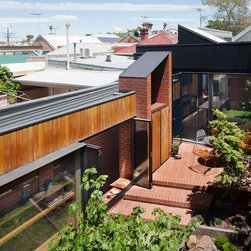
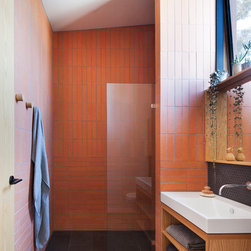
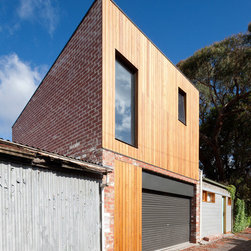
The Carlton Cloister additional bedroom and ensuite is located instead over the existing garage at the eastern end of the site, adjacent to the laneway, and connected by a corridor along the southern boundary. The two-storey addition fits into the character of the laneway while the corridor provides an opportunity for north facing glazing and connection to the garden.
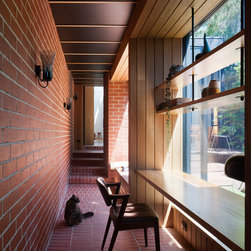
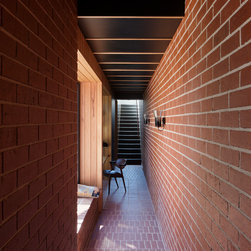
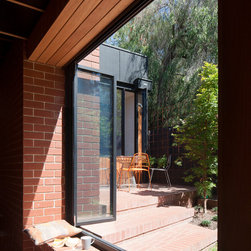
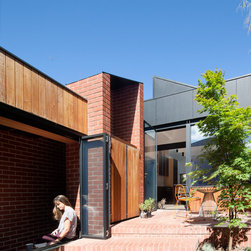
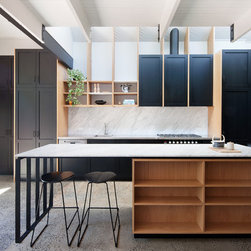
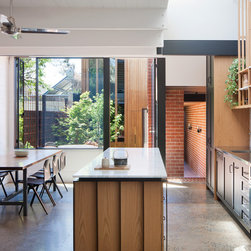
The corridor link between the main house and the two-storey addition is imagined as a cloister, by definition a covered walkway often with a garden connection. The steel framed north facing glazing encloses a circulation space with additional living, playing and working spaces located along its length. Taking up valuable outdoor space the cloister is continuously connected through to the garden. Built entirely from red brick and Blackbutt cladding, materials more closely aligned to external spaces than and interior ones enhance both the cloister and outdoor aspects of the connection.
This Carlton home is now transformed from Victorian workers cottage into a family home located minutes from the city, parks and public transport. The cloister provides thermal mass with a northern orientation, flexible areas for the family to use while maintaining sunny garden at the new heart of the house.
With heritage overlays protecting the streetscape, the evolution of the terrace house is often discovered from the bluestone laneways to the rear. Here the eclectic mix of old carriage houses, decrepit fibro additions and more recent extensions to terrace houses are to be found.
To accommodate a family the typical terrace plan of two front bedrooms with living to the rear is most often adapted adding a bedroom over the living areas of the house. Valuable space is lost through the addition of a stair to go up and the lack of natural light to the living spaces is not addressed and in many cases made worse.
The Carlton Cloister additional bedroom and ensuite is located instead over the existing garage at the eastern end of the site, adjacent to the laneway, and connected by a corridor along the southern boundary. The two-storey addition fits into the character of the laneway while the corridor provides an opportunity for north facing glazing and connection to the garden.
The corridor link between the main house and the two-storey addition is imagined as a cloister, by definition a covered walkway often with a garden connection. The steel framed north facing glazing encloses a circulation space with additional living, playing and working spaces located along its length. Taking up valuable outdoor space the cloister is continuously connected through to the garden. Built entirely from red brick and Blackbutt cladding, materials more closely aligned to external spaces than and interior ones enhance both the cloister and outdoor aspects of the connection.
This Carlton home is now transformed from Victorian workers cottage into a family home located minutes from the city, parks and public transport. The cloister provides thermal mass with a northern orientation, flexible areas for the family to use while maintaining sunny garden at the new heart of the house.
Project Year: 2016
Country: Australia
Postcode: 3054