
Rest House
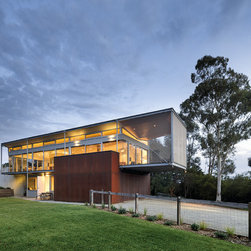
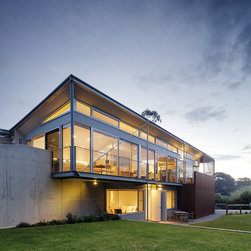
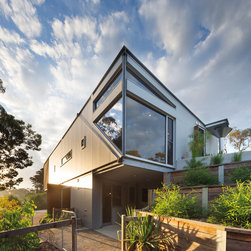
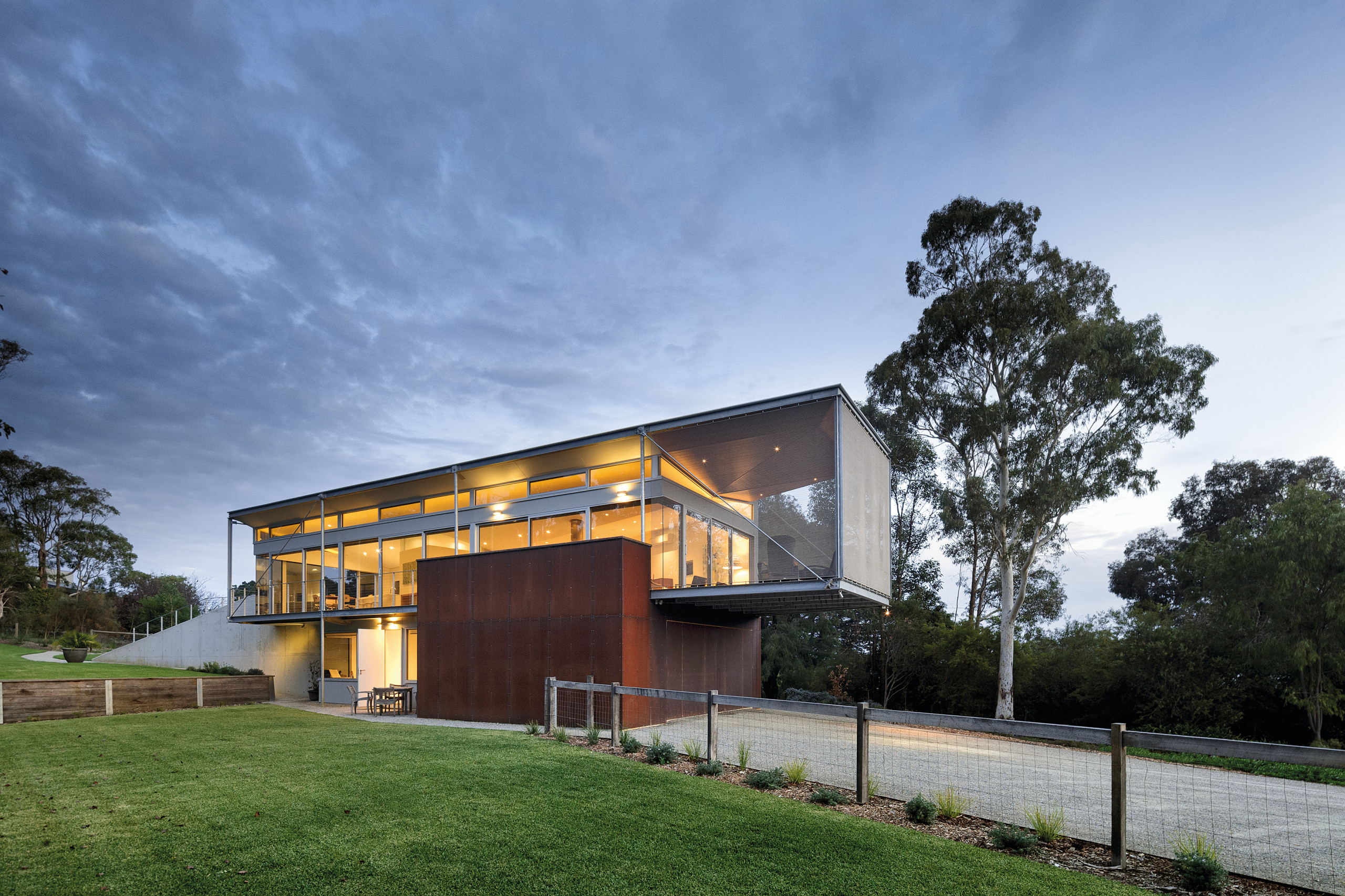
The Rest House in Flinders is the result of a long-standing friendship between the clients and architects. Their shared love of sailing and the Victorian coastline inspired the form of this house situated by the sea. Its butterfly roof mimics a boat’s hull, its angled walls protecting the garden from the prevailing southerly winds that whip off Bass Strait. The building and landscape have been designed to seamlessly integrate, utilising the slope of the land, the surrounding vegetation and views of the valley and ocean.
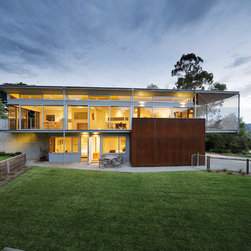
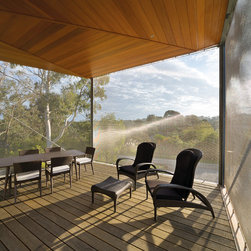
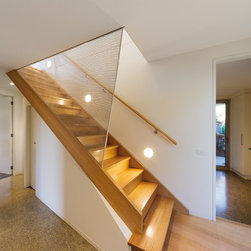
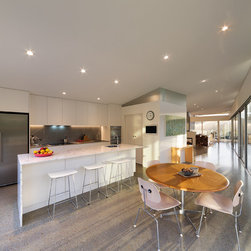
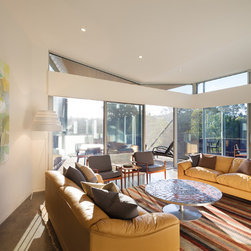
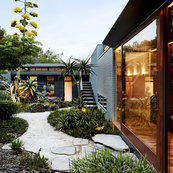
Designed for an active retiring couple, the first floor contains a large kitchen, dining and living area and, at its easterly end, spills onto an entertaining terrace and garden at the rear of the block. At the west end of the house, the living room opens up onto a large cantilevered deck, enclosed by stainless- steel mesh, which provides a protected vantage point overlooking the valley below. Natural light floods the large glazed walls, whilst sliding doors to the north, east and west connect the internal spaces with the surrounding garden and bush vistas.
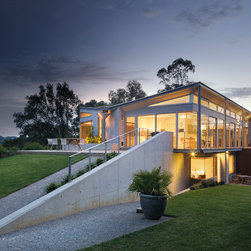
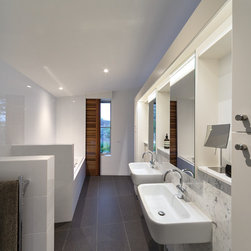
A discreet passage connects the main living space to the master bedroom and ensuite, which provide views over the terraced garden and across the coastal landscape towards the ocean. The fall of the site gives way to the ground floor below which contains two guest bedrooms, wet areas and a lock-up garage. A large water tank has been integrated into the design to form the base of the terrace above.
The house materials respond to the salty coastal location – concrete, glass, corten and galvanized steel – selected for their inherent durability. The design is purposefully detailed to accentuate the materials’ true characteristics and structural connections.
The site previously accommodated an existing 1950s merchant builder’s home, which, as an alternative to demolition, was removed in two halves and relocated to Phillip Island. Here it was renovated by Architect Tim Spicer and friend Trystan Martin on the weekends.
The practice of re-using existing elements also applied to the vegetation. Among the native gums, two 60-metre pine trees located at the higher eastern end of the site where cut down. The pines were converted into tan bark and used as mulch for the new garden beds. The size and location of the pine trees meant that the land had always been in shadow. Their removal, allowing the property and subsequent passive solar design to make use of abundant natural light. Additionally, all Australian native trees were retained.
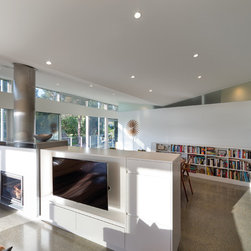
The butterfly roof is heavily insulated and designed in conjunction with the large glazed walls to allow the winter heat to penetrate the house, warming the concrete slab. In summer, the harsh sun is limited by the eave, along with the floor-to-ceiling block-out blinds. Cross ventilation is provided via the large glazed doors and operable highlight windows. All windows are double- glazed aluminum commercial sections with a UV-protective tint. A wood-fired combustion heater and split systems were installed for artificial heating and cooling when necessary. Environmentally awarded appliances and LED lighting were specified to minimize the overall energy usage. In addition to this, the roof form design provides solar-panel installation on the southern wing.
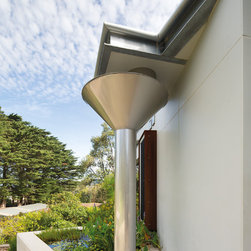
Rainwater, harvested in the central box gutter, is collected via an oversized sculptural drainpipe into a 96,000-litre concrete water tank. The water tank is built into the hill, which directs soil away from the house and forms the base of a large entertaining area at the rear of the house.
Designed for an active retiring couple, the first floor contains a large kitchen, dining and living area and, at its easterly end, spills onto an entertaining terrace and garden at the rear of the block. At the west end of the house, the living room opens up onto a large cantilevered deck, enclosed by stainless- steel mesh, which provides a protected vantage point overlooking the valley below. Natural light floods the large glazed walls, whilst sliding doors to the north, east and west connect the internal spaces with the surrounding garden and bush vistas.
A discreet passage connects the main living space to the master bedroom and ensuite, which provide views over the terraced garden and across the coastal landscape towards the ocean. The fall of the site gives way to the ground floor below which contains two guest bedrooms, wet areas and a lock-up garage. A large water tank has been integrated into the design to form the base of the terrace above.
The house materials respond to the salty coastal location – concrete, glass, corten and galvanized steel – selected for their inherent durability. The design is purposefully detailed to accentuate the materials’ true characteristics and structural connections.
The site previously accommodated an existing 1950s merchant builder’s home, which, as an alternative to demolition, was removed in two halves and relocated to Phillip Island. Here it was renovated by Architect Tim Spicer and friend Trystan Martin on the weekends.
The practice of re-using existing elements also applied to the vegetation. Among the native gums, two 60-metre pine trees located at the higher eastern end of the site where cut down. The pines were converted into tan bark and used as mulch for the new garden beds. The size and location of the pine trees meant that the land had always been in shadow. Their removal, allowing the property and subsequent passive solar design to make use of abundant natural light. Additionally, all Australian native trees were retained.
The butterfly roof is heavily insulated and designed in conjunction with the large glazed walls to allow the winter heat to penetrate the house, warming the concrete slab. In summer, the harsh sun is limited by the eave, along with the floor-to-ceiling block-out blinds. Cross ventilation is provided via the large glazed doors and operable highlight windows. All windows are double- glazed aluminum commercial sections with a UV-protective tint. A wood-fired combustion heater and split systems were installed for artificial heating and cooling when necessary. Environmentally awarded appliances and LED lighting were specified to minimize the overall energy usage. In addition to this, the roof form design provides solar-panel installation on the southern wing.
Rainwater, harvested in the central box gutter, is collected via an oversized sculptural drainpipe into a 96,000-litre concrete water tank. The water tank is built into the hill, which directs soil away from the house and forms the base of a large entertaining area at the rear of the house.