
Clifton Gardens House
Architects:
Mark Oxenham
Pip Campbell
Builder Read Project Group
Photographer Neil Fenelon
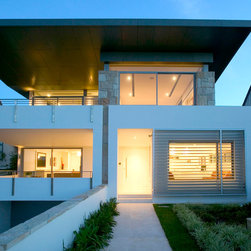
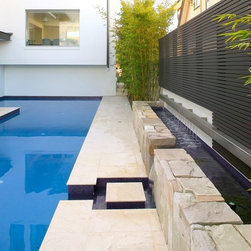
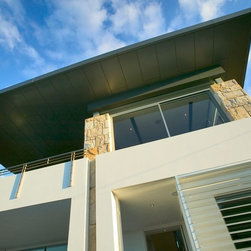
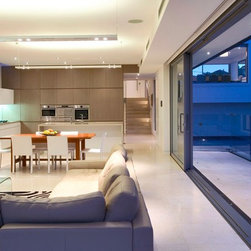
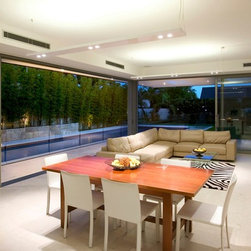
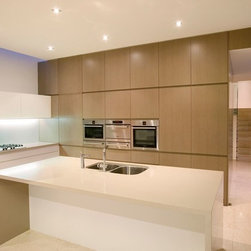
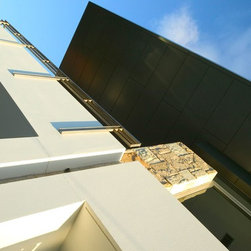
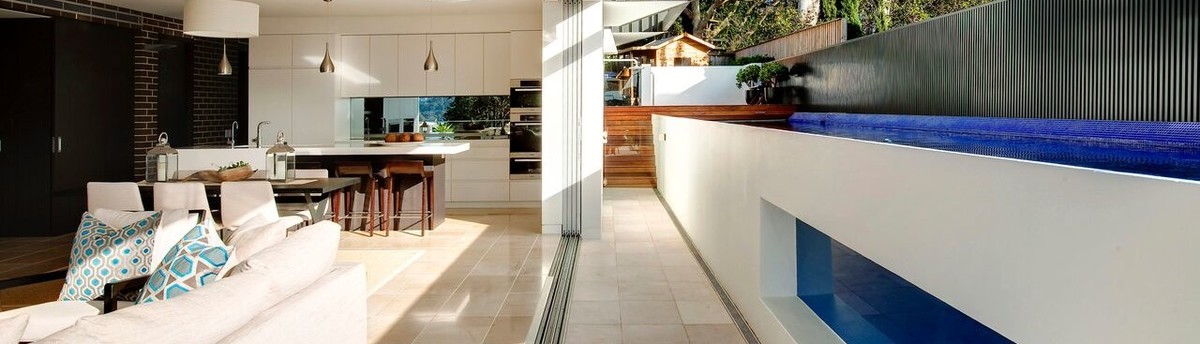
Configured in an 'L' shape around a 25 metre lap pool, the Clifton Gardens house makes the most of the attributes of its site. The three levels are 'split' around a central stair which breaks the building into two distinct parts. The front or street facing part contains two living spaces, a master bedroom, a study and a garage. The living spaces and master bedroom are positioned to the north for sun and views to the harbour to the north east. The upper living also opens to a roof deck over the rear portion of the house for views to the harbour and city to the south. The rear part of the house contains bedrooms at the upper level and the main living space at ground which opens to the pool and rear garden. Located in a conservation area, development approval was a challenge. The main elements of the front facade were designed to align horizontally and proportionally with the main detailed elements of the neighbouring buildings rather than mimic them.
Mark Oxenham
Pip Campbell
Builder Read Project Group
Photographer Neil Fenelon
Configured in an 'L' shape around a 25 metre lap pool, the Clifton Gardens house makes the most of the attributes of its site. The three levels are 'split' around a central stair which breaks the building into two distinct parts. The front or street facing part contains two living spaces, a master bedroom, a study and a garage. The living spaces and master bedroom are positioned to the north for sun and views to the harbour to the north east. The upper living also opens to a roof deck over the rear portion of the house for views to the harbour and city to the south. The rear part of the house contains bedrooms at the upper level and the main living space at ground which opens to the pool and rear garden. Located in a conservation area, development approval was a challenge. The main elements of the front facade were designed to align horizontally and proportionally with the main detailed elements of the neighbouring buildings rather than mimic them.
Project Year: 2010
Project Cost: More than $2,000,000 AUD
Country: Australia
Postcode: 2088