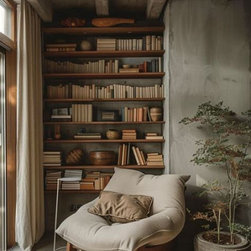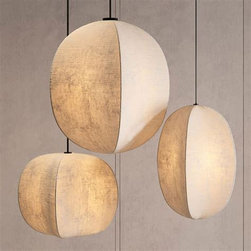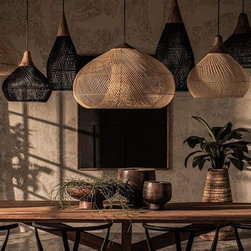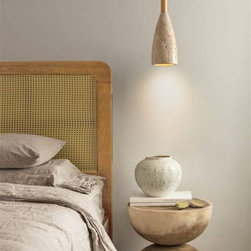


What are wabi-sabi lights?
If you’ve ever looked at a perfect, glossy ceiling light and thought, “This looks nice, but it doesn’t feel like me,” you’re already halfway to understanding wabi-sabi lights. They’re not about perfection. They’re about the way you actually live: a little messy, often tired, craving calm, and wanting a home that feels soft, real, and peaceful instead of staged.
In this article, you’ll see exactly what wabi-sabi lights are, how they work in everyday life, why they feel so calming, and how to choose and use them at home without overthinking. By the end, you’ll be able to look at any light and instantly tell: “Is this just pretty, or is it quietly helping me breathe easier?”
1. First things first: what does “wabi-sabi” mean?
Wabi-sabi is a Japanese aesthetic and worldview that finds beauty in imperfection, impermanence, and authenticity. It values things that look a little worn, handmade, simple, and natural rather than polished and flawless. According to the Japanese concept described on the Wabi-sabi entry on Chinese Wikipedia, you can think of it as appreciating the cracks, the patina, and the signs of time instead of hiding them—an approach that encourages you to accept that nothing is permanent or perfect.
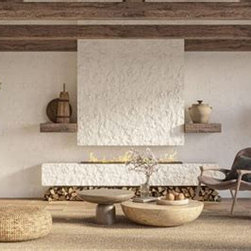
In recent interior design discussions, wabi-sabi appears as a style of spaces built around natural materials like wood, stone, clay, and textured fabrics, all allowed to age gracefully. These spaces are typically quiet, calm, and slightly raw: fewer shiny surfaces, more matte finishes, and a feeling that someone actually lives there.
If you want a simple phrase to remember it by, try this: wabi-sabi is “warm honesty” in your home. Nothing has to be perfect, but everything should feel sincere.
2. So what exactly are wabi-sabi lights?
Wabi-sabi lights are lamps, pendants, and ceiling fixtures designed (or chosen) to reflect that philosophy. Instead of chasing a flawless showroom look, they focus on:
- Soft, warm light that calms your eyes rather than attacking them.
- Natural or organic materials: ceramics, linen, rattan, wood, textured glass.
- Shapes that are a bit irregular or asymmetrical, not perfectly geometric.
- Surfaces that can develop patina, tiny marks, and gentle wear over time.
In practice, a wabi-sabi light might be a simple clay pendant with visible glazing runs, a linen drum shade that diffuses light like fog, or a low-profile ceiling light that looks almost like a soft stone attached to your ceiling. Under that light, you’re not trying to create a “show home”; you’re creating a “real home.”
Designers who talk about wabi-sabi lighting often highlight how it connects your space to nature by using materials and tones that echo earth, sand, and stone, and by favoring softer, indirect light instead of harsh glare.
2.1 A quick visual: wabi-sabi lights vs. typical showroom lights
 Aspect                   Wabi-sabi lights                                                                     Typical showroom lights
--------------------------------------------------------------------------------------------------------------------------------------------------
Look & finish            Matte, textured, sometimes irregular                          Glossy, very smooth, “perfect” finish very smooth,
Materials                  Ceramic, linen, rattan, natural wood                            Chrome, shiny plastic, polished metalshiny plastic,
Light quality            Warm, soft, often dimmable                                          Very bright, often cool white
A useful way to check: if the lamp would still look charming with a small chip, scratch, or stain over time, it’s probably closer to wabi-sabi than to showroom-perfect.
3. How wabi-sabi lights feel in your everyday life
To really understand wabi-sabi lights, imagine three simple evenings:
- Scenario 1: Late-night reading – You’re in bed with a book. A small wabi-sabi bedside lamp with a linen shade throws a warm circle of light over the pages. The rest of the room fades into soft shadow. Your eyes feel relaxed; nothing is glaring or buzzing.
- Scenario 2: Quiet Sunday coffee – A rough-glazed ceramic pendant over your dining table gives a gentle pool of warm light on the wood. The finish is not perfect; that’s why you love it. It makes the table feel like a ritual spot, not just furniture.
- Scenario 3: Tired after work – Instead of blasting the entire living room with a bright, cool ceiling light, you switch on two low, wabi-sabi lamps in opposite corners. The room instantly becomes softer; your shoulders drop; the day starts to melt away.
A recent article on wabi-sabi interiors points out that lighting in this style is less about decoration and more about emotion: users in calmer, softer lighting reported noticeably lower anxiety levels in one referenced study (around a 20%+ reduction on average).You experience that not as a number, but as a simple feeling: “I can finally exhale.”
4. What makes wabi-sabi lights different, technically?
Even though wabi-sabi sounds philosophical, wabi-sabi lights are practical too. Many of them use modern LED technology hidden inside soft, natural-looking bodies. According to the U.S. Department of Energy, residential LED products typically use at least 75% less energy and last up to 25 times longer than traditional incandescent bulbs.
The International Energy Agency also notes that roughly half of the global residential lighting market now uses LED technology, which is rapidly becoming the default choice as countries phase out low-efficiency bulbs.That means you can have a calm, wabi-sabi look without giving up modern efficiency.
If you like to see how things work under the hood, you can dig into:
- U.S. DOE’s LED Lighting overview – clear explanations of how LEDs save energy, plus typical savings numbers.
- IEA’s lighting section – a big-picture view of how lighting is shifting globally, including LED adoption and standards.
But you don’t need to be an engineer. In daily life, what matters is this: a good wabi-sabi light usually hides the tech and lets you feel the result—calmer eyes, lower bills, and a gentler mood.
4.1 Simple formula: estimating your lighting cost with wabi-sabi LEDs
Here’s an easy formula you can use for any light, wabi-sabi or not:
Monthly lighting cost ≈ (Total wattage × hours per day × 30 ÷ 1000) × electricity price per kWh
Example you can copy:
- You have one 10 W LED ceiling light in your bedroom.
- You use it 4 hours a day.
- Your electricity price is $0.20 per kWh.
Put it in the formula:
Monthly cost ≈ (10 × 4 × 30 ÷ 1000) × 0.20 = (1200 ÷ 1000) × 0.20 = 1.2 × 0.20 = $0.24 per month.
Now imagine you used an old 60 W incandescent bulb instead. Everything in the formula is the same except wattage:
Monthly cost ≈ (60 × 4 × 30 ÷ 1000) × 0.20 = (7200 ÷ 1000) × 0.20 = 7.2 × 0.20 = $1.44 per month.
For that one light, you’re saving about $1.20 per month. With 10 similar lights across your home, that’s roughly $12 a month, or about $144 a year, just by choosing LED-based fixtures. Recent reporting even suggests that Americans can save around $225 per year on bills simply by switching common bulbs to LEDs.
4.2 Everyday effect: time and money savings compared
 Home type                         Old annual cost*            New cost w/ LEDs       Yearly savings
--------------------------------------------------------------------------------------------------
Studio (8 bulbs)                                         $120                        $30                    $90
2-bedroom apartment                            $180                        $45                    $135 (12 bulbs)
Family home                                              $270                        $67                    $200+ (18+ bulbs)
*These numbers are simplified but realistic based on DOE guidance that lighting accounts for around 15% of home electricity use and that LEDs can cut that usage by at least 75%.
When you wrap this inside a wabi-sabi fixture, you get the best of both worlds: emotional comfort plus long-term savings.
5. The emotional side: why wabi-sabi lights feel so calming
From a design point of view, wabi-sabi lights work so well because they respect how your eyes and brain actually behave at home. Modern interior design research reminds us that light defines how you read the room before you even notice the furniture.
Wabi-sabi lighting uses a few simple tricks:
- Warm color temperatures (around 2700–3000K) that mimic sunsets and candlelight.
- Diffused light through fabric, frosted glass, or textured ceramics to soften harsh shadows.
- Lower, layered light instead of just one bright ceiling spot hitting you from above.
Put simply: your nervous system reacts better to gentle transitions and warm tones. In a noisy, blue-screen world, that makes a bigger difference than you think. Articles on wabi-sabi lighting trends in 2025 note that more people are actively choosing “comfort over trendiness” and “intentional beauty over perfection,” especially when they’re exhausted by constant digital perfection.
5.1 Simple formula: checking your “calm-light ratio”
Here’s a second, very human formula you can play with:
Calm-light ratio (%) = (Hours per day you use soft, warm lighting ÷ Hours you’re awake at home) × 100
For example, say on a weekday you:
- Are awake at home from 7 pm to 11 pm (4 hours).
- Use soft, wabi-sabi style lighting for 3 of those hours (dinner, reading, winding down).
Calm-light ratio = (3 ÷ 4) × 100 = 75%.
If your current setup is one bright, cold ceiling light you keep on the whole time, your ratio might be close to 0%. Just switching two main zones to wabi-sabi style lighting (for dinner and pre-bedtime) can push that number up without changing your whole house.
6. Types of wabi-sabi lights and where to use them
You don’t need a full renovation to bring wabi-sabi into your lighting. You can simply swap or add a few key pieces:
- Ceramic ceiling lights – Great for bedrooms and dining areas. Look for matte glazes, hand-formed shapes, and warm LED modules hidden inside.
- Linen or cotton drum shades – Ideal for living rooms and home offices where you need wider, gentler illumination.
- Rattan or bamboo pendants – Perfect over dining tables or kitchen islands, where the pattern of light and shadow adds texture.
- Stone-like or plaster wall lights – Great in hallways or by the bed, where you want a subtle glow instead of a spotlight.
If you want a consumer-friendly explainer on how to choose bulbs that work well with these fixtures (wattage, lumens, color temperature), Rowabi’s light bulb buying guide walks you through the basics with everyday language and examples.
6.1 Which option is easiest for you to start with?
Method              What you do                                         Difficulty             Best for
--------------------------------------------------------------------------------------------------
Swap bulbs only     Replace cold bulbs w/ warm LEDs   Very easy         Renters, small budgets

Add table/              Place one wabi-sabi lamp                      Easy                 Living rooms, bedrooms
floor lamp               in key corner

Change ceiling      Replace main light w/                         Medium                Owners, long-term homes
fixture                      wabi-sabi design                      (may need electrician)
                               (may need electrician)
A good starting point for many people: keep your existing ceiling light for chores, but add one or two wabi-sabi lamps for evenings. Over time, if you love the feeling, you can upgrade the main fixtures too.
7. Three common mistakes people make (and how to avoid them)
Even with something as gentle as wabi-sabi lights, it’s easy to go off track. Here are three mistakes I see all the time:
7.1 Mistake 1: “It looks wabi-sabi… but it feels like a cave”
Story: You buy a gorgeous, raw ceramic light with a tiny opening. It looks perfect in photos, but in your 18 m² living room it barely lights the coffee table. You end up turning on a bright, mismatched floor lamp just to see, and the mood disappears.
Fix it by checking lumens, not just looks. A consumer guide from the U.S. Department of Energy notes that lighting accounts for about 15% of a typical home’s electricity use, and recommends choosing LEDs with enough lumen output for each room size.:contentReference[oaicite:11]{index=11} Look for around 100–150 lumens per square metre for living areas and slightly less for bedrooms.
7.2 Mistake 2: “I bought a wabi-sabi lamp… but everything else is ultra-glossy”
Story: You place one small, natural linen lamp in a living room full of shiny marble, chrome, and bright white glare. Instead of blending in, the lamp looks lost and slightly “wrong.”
Fix: echo the idea at least two or three times. Add a textured throw, a raw wood side table, or a simple ceramic vase. Wabi-sabi works best when it feels like a quiet theme, not a lone prop.
7.3 Mistake 3: “I chose calm light… but never use it when I actually need it”
Story: You install a beautiful wabi-sabi ceiling light but still flick on the old bright one out of habit when you get home. Your calm-light ratio stays low.
Fix: Connect your wabi-sabi lights to the switches or smart scenes you actually use—first thing when you walk in, or your main “evening” button. The best design is the one you really use every day.
8. Real-life scenarios: how wabi-sabi lights help different people
8.1 If you’re renting
You might not be able to change the main ceiling fixtures, but you can still:
- Swap existing bulbs for warm, dimmable LEDs (keep the old ones to put back later).
- Add a floor lamp with a soft fabric shade and natural base.
- Use plug-in wall lamps or clip-on lamps with wabi-sabi shades instead of drilling.
This is the fastest, most landlord-safe way to turn a harsh rental into a softer nest. A modern energy-efficient lighting guide notes that simply changing bulbs can have a big impact on comfort and cost without major work.
8.2 If you’re setting up a long-term home
You can go deeper:
- Choose wabi-sabi ceiling lights for bedrooms and living spaces first (where you rest most).
- Plan layered lighting: one main soft source + 1–2 accent lamps per room.
- Invest in dimmers and warm LEDs to keep the mood adjustable.
For detailed, practical tips on planning ceiling lighting layouts, this ceiling lighting buying guide explains types, brightness, and safety standards in simple language.
8.3 If you’re very sensitive to light
People who get headaches from bright or flickering light often benefit the most from wabi-sabi lighting. Because the fixtures tend to be more diffused and the bulbs are usually warm LEDs, you can:
- Reduce glare by using closed or frosted shades.
- Choose lamps with multiple brightness settings instead of just on/off.
- Arrange lights to bounce off walls and ceilings, rather than hitting your eyes directly.
For more technical, but still readable guidance on energy-efficient, comfortable lighting, you can look at the DOE’s consumer guide to energy-efficient lighting, which explains how to choose LEDs that are gentle on both the eyes and the wallet.
9. How wabi-sabi lights fit into the bigger picture of your home
Wabi-sabi isn’t a trend you “complete” in a weekend; it’s a gradual shift. A recent overview of wabi-sabi in everyday life describes it as a counterbalance to perfectionism, encouraging you to slow down, enjoy simple, imperfect moments, and appreciate the ordinary objects around you.
Wabi-sabi lights support that shift by:
- Creating pockets of soft, forgiving light where you can rest.
- Making small messes, wrinkles, and everyday “life traces” feel less harsh and exposed.
- Reducing visual noise so you focus more on people and feelings than on clutter.
If you’d like a structured overview of how lighting fits into overall building energy and comfort, the IEA’s lighting page offers charts and explanations on efficiency, standards, and trends in simple terms suitable for non-experts
10. Putting it all together: what are wabi-sabi lights for you?
Let’s answer the title question clearly now:
Wabi-sabi lights are lighting choices—fixtures, bulbs, and placements—that combine gentle, efficient light with natural, imperfect materials to create a home that feels calm, honest, and lived-in rather than polished and staged.
For you, that might mean:
- Swapping a cold ceiling lamp for a warm, ceramic or linen one.
- Adding a single, beautiful wabi-sabi floor lamp in the corner where you always collapse after work.
- Slowly building up a set of lights that match your real routines instead of Instagram photos.
If you ever feel lost while choosing bulbs or fixtures, you can always return to three simple questions:
- Does this light feel kind to my eyes?
- Does its material and shape still look good if it gets a little worn?
- Does it quietly support the way I actually live, not how I wish I looked online?
If you can answer “yes” to those, you’re well within wabi-sabi territory—whether it’s a tiny bedside lamp or the main light in your living room.
Finally, if you want a broad but approachable reference on lighting terms (lumens, watts, color temperatures