
Coghlan Street House
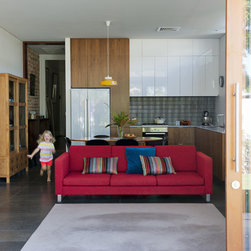
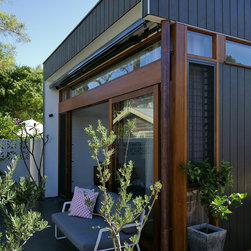
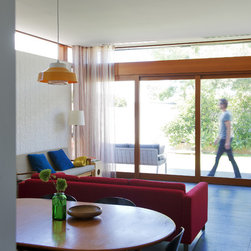
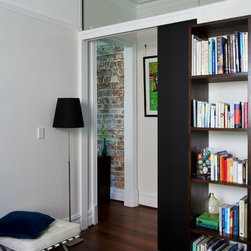
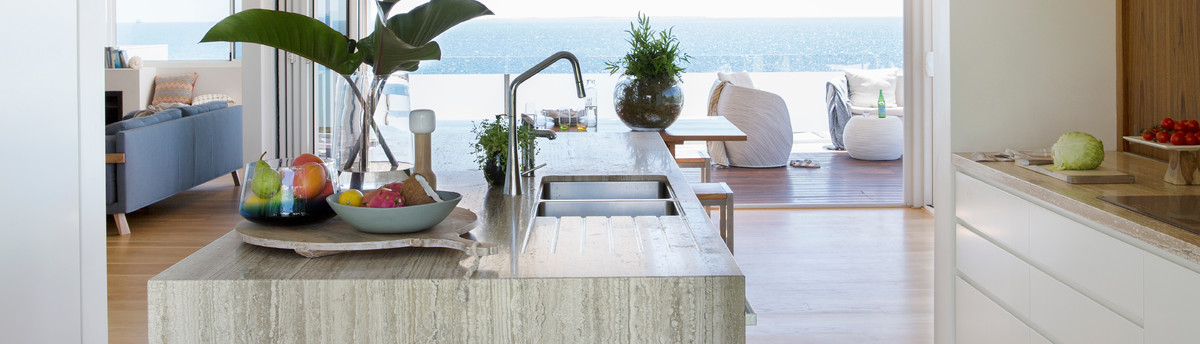
A modest semi-detached workers cottage is converted into a flexible and modern home for a small growing urban family. The Western facing living spaces have been opened up to the small terrace garden and protected from afternoon sun via an operable external awning and sunscreen which also creates a flexible covered external area.
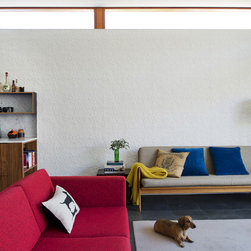
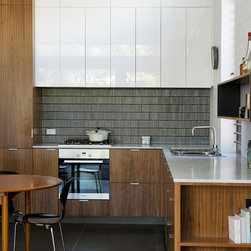
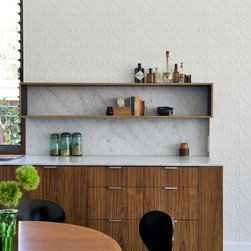
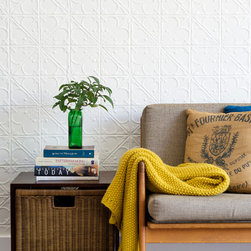
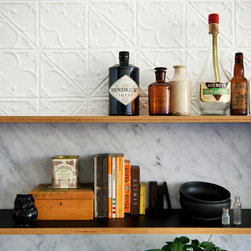
Heritage pressed tin is re-interpreted as a cladding material to marry the new and old elements of the house. Dark stone floors contracts the timber floors to delineate the connection from old to new. A flexible third bedroom is included in the design.
External cladding is lightweight and well insulated to create a comfortable internal environment which references the ‘lean-to’ architectural palette and allows the masonry elements of the existing house to be retained. This connection between the old and the new is retained and reinforced.
Lightweight materials and thick stud frames allow bulk insulation to provide maximum thermal separation from the outside and maintain a stable internal temperature. Access to Northern light is precluded as the building’s entire Northern face is the pigeon pair of the semi-detached workers cottages, and as such the design allows and controls access to its rear western orientation.
The western light (to the rear) is encouraged in the winter months and controlled in the summer months by the inclusion of an operable external awning and sunscreen. This is complemented by dark stone flooring which heats up in winter and is shaded in summer.
Aluminium windows and framing have been avoided both for the embodied energy in the product and for the superior thermal performance of timber frame glazed windows and door. The framing system included in the design achieves an equivalent U-value or thermal performance of a double glazed aluminium suite.
The lighting to the extension throughout is provided via LED lighting, which is currently the most sustainable form of space lighting.
Heritage pressed tin is re-interpreted as a cladding material to marry the new and old elements of the house. Dark stone floors contracts the timber floors to delineate the connection from old to new. A flexible third bedroom is included in the design.
External cladding is lightweight and well insulated to create a comfortable internal environment which references the ‘lean-to’ architectural palette and allows the masonry elements of the existing house to be retained. This connection between the old and the new is retained and reinforced.
Lightweight materials and thick stud frames allow bulk insulation to provide maximum thermal separation from the outside and maintain a stable internal temperature. Access to Northern light is precluded as the building’s entire Northern face is the pigeon pair of the semi-detached workers cottages, and as such the design allows and controls access to its rear western orientation.
The western light (to the rear) is encouraged in the winter months and controlled in the summer months by the inclusion of an operable external awning and sunscreen. This is complemented by dark stone flooring which heats up in winter and is shaded in summer.
Aluminium windows and framing have been avoided both for the embodied energy in the product and for the superior thermal performance of timber frame glazed windows and door. The framing system included in the design achieves an equivalent U-value or thermal performance of a double glazed aluminium suite.
The lighting to the extension throughout is provided via LED lighting, which is currently the most sustainable form of space lighting.
Country: Australia
Postcode: 6008