

Why Your Home Builder's Crane Operator Should Be NCCCO Certified
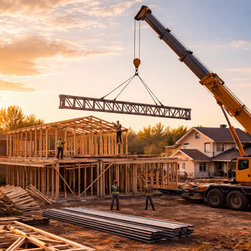
I still remember standing in my neighbor's yard three summers ago, watching a crane swing a load of roof trusses over his half-built colonial. The operator was calm, precise — almost boring to watch, honestly. That's exactly how it should be. Because when crane work gets exciting on a residential job site, it usually means something has gone terribly wrong.
Most homeowners pouring six figures into a new build or a major addition don't think twice about the crane that shows up on day one of framing. They vet the general contractor, obsess over kitchen tile samples, and negotiate change orders — but the person operating several tons of machinery next to their property line? Rarely a second thought.
That's a mistake worth correcting.
What NCCCO Certification Actually Means
The National Commission for the Certification of Crane Operators — NCCCO for short — has been the industry benchmark since 1995. It's an independent, nonprofit body that tests crane operators on everything from load chart calculations to rigging safety and real-world machine handling.
Getting certified isn't a weekend seminar. Candidates have to pass a written core exam, a specialty written exam for their specific crane type, and a hands-on practical test where they actually move loads under evaluation. OSHA recognizes NCCCO certification as an approved credential, and many states flat-out require it before an operator touches a lever on a job site.
For context, operators preparing for the exam often spend weeks studying load dynamics, site hazard assessment, and federal safety regs. Resources like a comprehensive NCCCO practice test can give you a sense of just how detailed this knowledge needs to be — we're talking about wire rope inspection, boom deflection, and ground bearing pressure, not exactly light reading.
Why It Matters for Your Home Project
Here's what's at stake. According to OSHA, crane-related incidents account for a significant portion of construction fatalities each year. Many of those involve residential and light commercial projects where oversight tends to be looser than on big commercial sites.
When your contractor hires a certified crane operator, you're getting someone who understands outrigger setup on soft residential soil, knows how to calculate whether a load can safely clear your neighbor's fence, and won't take shortcuts when the wind picks up.
An uncertified operator might get the trusses up. But they're also more likely to damage your foundation, clip a power line, or create the kind of liability nightmare that stops a project cold.
Questions Worth Asking Your Contractor
Before your next major project kicks off, try asking your general contractor a few pointed questions:
Does your crane operator hold current NCCCO certification? Can you provide their CCO card number so I can verify it online? Is the crane company carrying adequate insurance for residential work?
These aren't rude questions. Any reputable contractor will appreciate that you're taking site safety seriously. And if they can't answer them? That tells you something too.
The Bottom Line
Your home is probably the biggest investment you'll ever make. The people building it should be credentialed, vetted, and held to a real standard — crane operators included. NCCCO certification isn't just a piece of paper. It's the difference between a smooth lift day and a phone call nobody wants to get.
Add crane operator credentials to your list the next time you're looking through bids or contractor profiles. It's a minor element that literally has a huge impact.
Most homeowners pouring six figures into a new build or a major addition don't think twice about the crane that shows up on day one of framing. They vet the general contractor, obsess over kitchen tile samples, and negotiate change orders — but the person operating several tons of machinery next to their property line? Rarely a second thought.
That's a mistake worth correcting.
What NCCCO Certification Actually Means
The National Commission for the Certification of Crane Operators — NCCCO for short — has been the industry benchmark since 1995. It's an independent, nonprofit body that tests crane operators on everything from load chart calculations to rigging safety and real-world machine handling.
Getting certified isn't a weekend seminar. Candidates have to pass a written core exam, a specialty written exam for their specific crane type, and a hands-on practical test where they actually move loads under evaluation. OSHA recognizes NCCCO certification as an approved credential, and many states flat-out require it before an operator touches a lever on a job site.
For context, operators preparing for the exam often spend weeks studying load dynamics, site hazard assessment, and federal safety regs. Resources like a comprehensive NCCCO practice test can give you a sense of just how detailed this knowledge needs to be — we're talking about wire rope inspection, boom deflection, and ground bearing pressure, not exactly light reading.
Why It Matters for Your Home Project
Here's what's at stake. According to OSHA, crane-related incidents account for a significant portion of construction fatalities each year. Many of those involve residential and light commercial projects where oversight tends to be looser than on big commercial sites.
When your contractor hires a certified crane operator, you're getting someone who understands outrigger setup on soft residential soil, knows how to calculate whether a load can safely clear your neighbor's fence, and won't take shortcuts when the wind picks up.
An uncertified operator might get the trusses up. But they're also more likely to damage your foundation, clip a power line, or create the kind of liability nightmare that stops a project cold.
Questions Worth Asking Your Contractor
Before your next major project kicks off, try asking your general contractor a few pointed questions:
Does your crane operator hold current NCCCO certification? Can you provide their CCO card number so I can verify it online? Is the crane company carrying adequate insurance for residential work?
These aren't rude questions. Any reputable contractor will appreciate that you're taking site safety seriously. And if they can't answer them? That tells you something too.
The Bottom Line
Your home is probably the biggest investment you'll ever make. The people building it should be credentialed, vetted, and held to a real standard — crane operators included. NCCCO certification isn't just a piece of paper. It's the difference between a smooth lift day and a phone call nobody wants to get.
Add crane operator credentials to your list the next time you're looking through bids or contractor profiles. It's a minor element that literally has a huge impact.