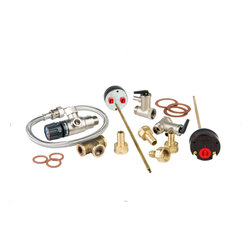


Boiler Spare Parts: How to Identify What You Need Before You Buy
Maintaining a heating system is often a race against the cold. When a boiler fails, the immediate instinct is to fix it as quickly as possible. However, the world of boiler spare parts is vast and technical, making it easy for homeowners and even junior engineers to order the wrong component. Identifying the exact part you need before hitting the "buy" button is the most critical step in ensuring a safe, cost-effective, and long-lasting repair. Whether you are dealing with a faulty heat exchanger, a worn-out pump, or a temperamental diverter valve, precision is key.
Understanding Your Boiler’s Identity
Before you can look for a spare part, you must know exactly what machine you are working with. Every boiler has a unique identity, usually found on a data plate. This plate is a small metal or plastic sticker located either behind the front panel, on the underside of the casing, or inside the control flap.
The data plate provides the specific model name, serial number, and GC (Gas Council) number. The GC number is particularly important in the UK; it is a seven-digit code that serves as a universal ID for gas appliances. Providing this number to a supplier like Precise Supplies is the most foolproof way to ensure the spare part is compatible with your specific unit.
Common Boiler Parts and Their Functions
To identify what you need, it helps to understand which components are most likely to fail and what symptoms they produce. Boilers are complex machines, but most breakdowns originate from a handful of hard-working parts.
The Diverter Valve is a common culprit in combi boilers. If you have hot water in your taps but your radiators are cold (or vice versa), the diverter valve is likely stuck. The PCB (Printed Circuit Board) acts as the "brain" of the boiler. If the unit isn't responding to any commands or the display is blank, the PCB may have shorted. Meanwhile, the Auto Air Vent is responsible for releasing trapped air. If you notice a slow leak or a drop in pressure, this small but vital component might be the issue.
Using Exploded Diagrams for Visual Confirmation
If you are unsure of a part’s name, exploded diagrams are your best friend. Most manufacturers provide these visual breakdowns in the installation manual. An exploded diagram shows every nut, bolt, and valve separated but in its relative position.
By cross-referencing the diagram with the physical part inside your boiler, you can find the manufacturer’s part number. Buying based on a part number rather than a generic description significantly reduces the risk of receiving an incompatible item. Always look for "Genuine OEM" (Original Equipment Manufacturer) parts to ensure the safety and warranty of your appliance remain intact.
Identifying Parts by Symptom
- Noisy operation (Kettling):Often points to a scaled-up heat exchanger or a failing pump.
- Constant pressure loss:May indicate a faulty expansion vessel or a leaking pressure relief valve.
- No ignition:Could be a worn spark electrode or a faulty gas valve.
The Importance of Professional Diagnosis
While identifying parts is a great way to prepare for a repair, it is essential to remember that internal gas components should only be handled by a Gas Safe registered engineer. A professional can use diagnostic tools, such as a multimeter, to confirm if a part has electrically failed before you spend money on a replacement.
Once the fault is confirmed, you can source the part yourself to save on the "markup" often charged by contractors. By knowing exactly what you need, you can browse the extensive inventory at Precise Supplies with confidence, knowing you are getting the right component for the job.
Why Quality Spare Parts Matter
It can be tempting to opt for refurbished or "universal" parts found on secondary marketplaces. However, boiler components operate under high pressure and extreme heat. Using non-approved parts can lead to catastrophic failure, carbon monoxide leaks, or fire hazards.
Investing in high-quality, brand-new spare parts ensures that your boiler operates at peak efficiency. This not only keeps your home safe but also prevents the "domino effect," where a failing cheap part puts undue stress on other expensive components like the fan or the heat exchanger.
Making the Final Purchase
Once you have the GC number, the model name, and the part number, you are ready to order. Check for warranty information on the spare part and ensure the supplier has a clear return policy just in case. High-quality suppliers will often list the specific models a part is compatible with, providing an extra layer of reassurance.
Identifying your boiler needs shouldn't be a guessing game. With a little research and the right data, you can restore your home's heating quickly and safely.
Get the Right Parts Today
Don't let a broken boiler leave you in the cold. Visit Precise Supplies to browse our extensive range of genuine boiler spare parts. From pumps to PCBs, we provide the components you need to get your system back up and running.