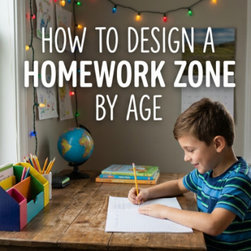


How to Design a Homework Zone That Actually Gets Used (By Age Group)
The desk is nicely set up, supplies are added, and it is kept tidy, but your child is still doing homework on the couch? The situation occurs in many homes. Usually, the problem is that the homework zone is not suited to the child's age, habits, or attention span.
This guide explains how to set up a homework area by age. Throughout this article, you will see what works for early learners, elementary students, and teens. As each stage requires a different space, you should modify it according to their age. As well, home setups that enable focus and routine are ideal for tools like a K-12 learning platform, which can empower your kid for better school performance.
What Makes a Homework Zone Actually Work
Consider design ideas that are appropriate for all age groups before switching to age-specific configurations. By doing this, parents have a clear understanding of how the area should be organized.
Location
In most cases, the youngest students get stuck on easy assignments and need immediate help to complete them. For this reason, study space for kids should be near their parents' kitchen or living room.
As kids grow older, they need more space to learn. It is best to have a separate space without a TV or other loud appliances. Having a quiet area will allow them to maintain concentration.
Lighting and ergonomics
The lack of adequate lighting shortens workdays and wears out the eyes. It is best to use a desk lamp if you wish to light a specific page rather than your entire room. During the day, locate the workstation near a window to maximize natural light.
To fit a child, a chair must be adjustable. The feet should touch the floor. The height of the table should allow for comfortable shoulders. If the youngster is uncomfortable, it won't take long for them to find another arrangement.
Storage and organization
Basic storage is necessary for young children. The best choice is to use open bins. They can readily find notebooks and pencils, so they don't need to search for them. Labels with text or images can help them organize their possessions.
Teenagers need structure. File organizers, drawers, and folders can help keep topics organized. By doing this, you can cut down on the time you spend looking for materials.
Ages 5–7 — The Early Learner Zone
At this stage, the homework zone design should feel familiar and easy to use. Young children do not sit still for long. They switch between writing, drawing, and talking. The space should support this pattern. A strict kids desk setup often fails here. Comfort and access matter more than formality.
Keep it cozy and close
Give the child easy access to the homework area so they can get help from an adult when they need it. This is best done at a kitchen table or in a small living room area.
While doing homework, children between the ages of five and seven frequently ask questions. They are motivated by the desire for prompt responses. When a parent is around, children stay on the job longer and don't abandon it midway. They become distracted more quickly and move on to something else when the area is too far away.
This configuration also facilitates a well-defined daily schedule. The child goes from snack to a brief nap in the same location before settling in to complete their homework.
Supplies to stock
Keep materials visible and within reach. Use low shelves or open bins.
Stock basic tools:
Don’t store items in closed boxes because children will not be able to open them. They won't use the tool if they can't see it. It is a good idea to rotate supplies every few weeks, because a large number of items creates distractions. When the set is smaller, attention is kept on the task at hand.
The desk vs. the table debate
At this age, a low table is better than a formal desk. Working at a desk can feel restrictive. It is designed for them to sit still. When children are young, they frequently change positions. Depending on their position, they may lean, stand, or kneel. The craft table allows for movement.
Ideally, the surface should be wide enough for cutting and drawing. A chair should allow feet to touch the floor.
Ages 8–11 — The Elementary Homework Hub
At this age, the study space needs structure. Meanwhile, the area should still encourage creative work. This is also a time for after-school routine for kids, which is why the study zone should be comfortable for learning and hobbies.
Building in organization from the start
Label bins or folders for each subject so the child knows where everything belongs. For instance, separate bins for math, reading, and projects. Doing this will make homework time less confusing.
Add a simple weekly tracker on the wall. Use it to write down tasks for each day. The child can see what needs to be done today and what comes next. This reduces the need for constant reminders and supports a clear routine.
Balancing art and academics
Elementary school study habits usually rely on posters, models, and written assignments. The desk should have space for these elements. Don't overload the surface with decor. It is easier for the child to switch tasks without getting up if tools are kept nearby.
During this stage, some families provide extra support. For example, an elementary math tutor can help when math concepts become harder. It works best in an organized and quiet workspace.
Desk setup essentials
At the same time, the desk should be able to accommodate books, notebooks, and a laptop. Small surfaces pile up materials. This disrupts focus. Make sure you have a good desk lamp. The light should fall directly on the page. Also, the area should be free of toys; good work begins with a clean desk.
Ages 12–14 — The Middle Schooler's Study Corner
The middle school years are marked by a shift toward independence and a need for a private children's study room ideas.
Separation from Family Noise
At this age, social distractions become a major problem. Consider moving kids study room organization to a quieter area, such as the corner of a bedroom or the corner of a guest room. Separating them physically respects their growing autonomy needs.
Managing Tech and Distractions
It is important for middle schoolers to have charging stations and laptop stands so they can stay organized. When working in a group, keep your phones in another room. In loud houses, noise-canceling headphones may help them stay focused.
Personal Design Buy-In
Let the student choose the color of the chair or the desk lamp. When they have a say in the homework zone design, they are more likely to actually sit there. Having a space that reflects their personality feels like a retreat rather than a prison.
Ages 15–18 — The Teen Study Zone
High school students face long work blocks and complex exam preparation. Their space should look more like a professional office than a playroom.
Minimalist and Functional
Get rid of all "childish" decor and old toys. One of the most important investments is a clean, large work surface and a high-quality chair for the office. For a faster loading time during research, ensure that the Wi-Fi signal is strong.
This guide explains how to set up a homework area by age. Throughout this article, you will see what works for early learners, elementary students, and teens. As each stage requires a different space, you should modify it according to their age. As well, home setups that enable focus and routine are ideal for tools like a K-12 learning platform, which can empower your kid for better school performance.
What Makes a Homework Zone Actually Work
Consider design ideas that are appropriate for all age groups before switching to age-specific configurations. By doing this, parents have a clear understanding of how the area should be organized.
Location
In most cases, the youngest students get stuck on easy assignments and need immediate help to complete them. For this reason, study space for kids should be near their parents' kitchen or living room.
As kids grow older, they need more space to learn. It is best to have a separate space without a TV or other loud appliances. Having a quiet area will allow them to maintain concentration.
Lighting and ergonomics
The lack of adequate lighting shortens workdays and wears out the eyes. It is best to use a desk lamp if you wish to light a specific page rather than your entire room. During the day, locate the workstation near a window to maximize natural light.
To fit a child, a chair must be adjustable. The feet should touch the floor. The height of the table should allow for comfortable shoulders. If the youngster is uncomfortable, it won't take long for them to find another arrangement.
Storage and organization
Basic storage is necessary for young children. The best choice is to use open bins. They can readily find notebooks and pencils, so they don't need to search for them. Labels with text or images can help them organize their possessions.
Teenagers need structure. File organizers, drawers, and folders can help keep topics organized. By doing this, you can cut down on the time you spend looking for materials.
Ages 5–7 — The Early Learner Zone
At this stage, the homework zone design should feel familiar and easy to use. Young children do not sit still for long. They switch between writing, drawing, and talking. The space should support this pattern. A strict kids desk setup often fails here. Comfort and access matter more than formality.
Keep it cozy and close
Give the child easy access to the homework area so they can get help from an adult when they need it. This is best done at a kitchen table or in a small living room area.
While doing homework, children between the ages of five and seven frequently ask questions. They are motivated by the desire for prompt responses. When a parent is around, children stay on the job longer and don't abandon it midway. They become distracted more quickly and move on to something else when the area is too far away.
This configuration also facilitates a well-defined daily schedule. The child goes from snack to a brief nap in the same location before settling in to complete their homework.
Supplies to stock
Keep materials visible and within reach. Use low shelves or open bins.
Stock basic tools:
- crayons
- safety scissors
- glue sticks
- pencils
- picture books
Don’t store items in closed boxes because children will not be able to open them. They won't use the tool if they can't see it. It is a good idea to rotate supplies every few weeks, because a large number of items creates distractions. When the set is smaller, attention is kept on the task at hand.
The desk vs. the table debate
At this age, a low table is better than a formal desk. Working at a desk can feel restrictive. It is designed for them to sit still. When children are young, they frequently change positions. Depending on their position, they may lean, stand, or kneel. The craft table allows for movement.
Ideally, the surface should be wide enough for cutting and drawing. A chair should allow feet to touch the floor.
Ages 8–11 — The Elementary Homework Hub
At this age, the study space needs structure. Meanwhile, the area should still encourage creative work. This is also a time for after-school routine for kids, which is why the study zone should be comfortable for learning and hobbies.
Building in organization from the start
Label bins or folders for each subject so the child knows where everything belongs. For instance, separate bins for math, reading, and projects. Doing this will make homework time less confusing.
Add a simple weekly tracker on the wall. Use it to write down tasks for each day. The child can see what needs to be done today and what comes next. This reduces the need for constant reminders and supports a clear routine.
Balancing art and academics
Elementary school study habits usually rely on posters, models, and written assignments. The desk should have space for these elements. Don't overload the surface with decor. It is easier for the child to switch tasks without getting up if tools are kept nearby.
During this stage, some families provide extra support. For example, an elementary math tutor can help when math concepts become harder. It works best in an organized and quiet workspace.
Desk setup essentials
At the same time, the desk should be able to accommodate books, notebooks, and a laptop. Small surfaces pile up materials. This disrupts focus. Make sure you have a good desk lamp. The light should fall directly on the page. Also, the area should be free of toys; good work begins with a clean desk.
Ages 12–14 — The Middle Schooler's Study Corner
The middle school years are marked by a shift toward independence and a need for a private children's study room ideas.
Separation from Family Noise
At this age, social distractions become a major problem. Consider moving kids study room organization to a quieter area, such as the corner of a bedroom or the corner of a guest room. Separating them physically respects their growing autonomy needs.
Managing Tech and Distractions
It is important for middle schoolers to have charging stations and laptop stands so they can stay organized. When working in a group, keep your phones in another room. In loud houses, noise-canceling headphones may help them stay focused.
Personal Design Buy-In
Let the student choose the color of the chair or the desk lamp. When they have a say in the homework zone design, they are more likely to actually sit there. Having a space that reflects their personality feels like a retreat rather than a prison.
Ages 15–18 — The Teen Study Zone
High school students face long work blocks and complex exam preparation. Their space should look more like a professional office than a playroom.
Minimalist and Functional
Get rid of all "childish" decor and old toys. One of the most important investments is a clean, large work surface and a high-quality chair for the office. For a faster loading time during research, ensure that the Wi-Fi signal is strong.